AWS & DevOps

Total Duration : 4 Months

Description to AWS & DevOps

AWS (Amazon Web Services) and DevOps are essential technologies used to build, deploy, manage, and scale modern applications. AWS provides cloud computing services such as virtual servers, storage, databases, networking, and security. Popular AWS services include EC2, S3, RDS, IAM, and Lambda, which help businesses host applications, store data securely, and manage cloud infrastructure efficiently.

DevOps is a combination of development and operations practices that improves collaboration between software developers and IT teams. It focuses on automating software development, testing, deployment, and monitoring processes. Tools such as Git, Jenkins, Docker, Kubernetes, and Terraform help teams deliver software faster, maintain application reliability, and reduce manual work.

Learning AWS and DevOps provides practical skills in cloud infrastructure management, CI/CD pipelines, containerization, infrastructure automation, and application monitoring. These technologies are widely used in modern IT industries and offer career opportunities such as AWS Cloud Engineer, DevOps Engineer, Cloud Administrator, Site Reliability Engineer (SRE), and Cloud Solutions Architect.
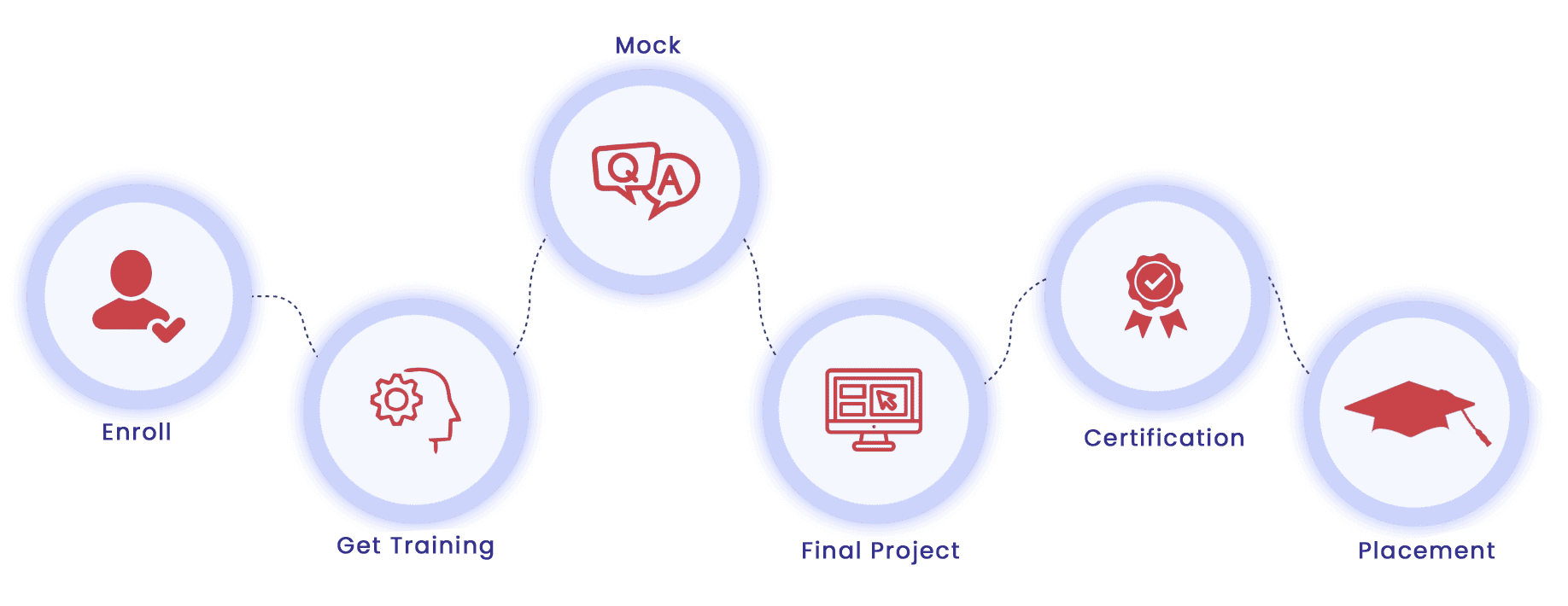
Empeno Journey To Success !

Introduction to HTML CSS

The learning path to the course

  • What is DevOps?
  • Problem That DevOps Solves
  • DevOps Life Cycle
  • Stakeholders of DevOps
  • DevOps Technology Categories
  • What is SDLC?
  • Collaboration in DevOps
  • Phases of SDLC
  • Planning
  • Role of Dev in SDLC
  • Configuration Management
  • Role of Ops in SDLC
  • Source Control
  • Dev Environments
  • What is Continuous Integration?
  • Continuous Testing
  • Continuous Deployment
  • Benefits of CI/CD
  • Best Practices for CI/CD
  • What is SDLC?
  • Waterfall Model
  • Advantages and Disadvantages of Waterfall
  • Agile Development Process
  • Agile Manifesto
  • Agile Scrum Workflow
  • Agile Analysis and Estimation Techniques
  • Types of Roles and Responsibilities
  • What is an Operating System?
  • Linux Overview?
  • What is Unix, Linux
  • Linux vs Windows
  • Linux Flavors
  • Linux Architecture
  • Basic Linux Commands
  • Reading Files
  • Redirection Operators
  • User Management
  • Group Management
  • File System Management
  • Editors
  • Shell History and Introduction
  • Types of Shells
  • Shebang Line in Shell
  • Command Line Arguments
  • Variables
  • Types of Operators
  • Loops
  • Case Statement
  • Functions
  • Introduction to Git
  • What is a Version Control System (VCS)?
  • Distributed Vs Non-distributed VCS
  • Git Installation and Setup
  • GitHub Account Setup
  • Branching, Merging, and Rebasing
  • Handling Git Conflicts
  • Pull Requests and Stashing
  • Repository Cloning and Management
  • What is build tool
  • Automated Build Process
  • Maven Introduction & Objectives
  • Maven Installation
  • Maven Terminology
  • Maven Archetypes
  • Maven Project Creation
  • Maven Dependencies
  • Maven Repositories (Local, Central, Remote)
  • Maven Goals
  • Introduction
  • Jenkins Server Setup
  • Jenkins Jobs
  • How to integrate Jenkins with Maven
  • Jenkins Dashboard
  • Jenkins Plugins
  • Setup and Running Jenkins Jobs
  • Jenkins Pipeline Introduction
  • Multi-Stage Pipeline
  • Jenkins with Git, Maven, SonarQube, Nexus
  • Jenkins Master-Slave Architecture
  • Jenkins with Docker and Kubernetes
  • What is Configuration Management?
  • What is Ansible?
  • Installing Ansible
  • Introduction to Playbooks
  • Writing Playbooks
  • Playbooks Execution
  • Ansible Roles and Handlers
  • Ansible Galaxy
  • Ansible Tower Overview
  • What is Docker?
  • Life Without Docker
  • Life With Docker
  • Installing Docker on Linux
  • What is a Container?
  • Docker Run Command
  • Working with Images
  • Container Lifecycle
  • Dockerfile
  • Docker Networking
  • Docker Volumes
  • Docker Compose
  • Docker Swarm
  • Spring Boot App with Docker
  • Python App with Docker
  • MySQL with Docker
  • What is Kubernetes?
  • Docker Swarm Vs Kubernetes
  • Kubernetes Architecture
  • Control Plane
  • Worker Nodes
  • Namespaces
  • Pods
  • Pod Lifecycle
  • Services (Cluster IP, Node Port, Load Balancer)
  • Replication Controller
  • Replication Set
  • Daemon Set
  • Stateful Set
  • Deployments (Recreate, Rolling Update, Blue
  • Green)
  • Config Maps
  • Secrets
  • Ingress Controller
  • HELM Charts
  • Introduction to Terraform
  • Terraform vs. Ansible
  • Terraform Installation
  • Terraform Architecture
  • Writing Terraform Scripts
  • Infrastructure Creation and Management
  • Credentials Management
  • Introduction to Cloud Computing
  • Types of Cloud Deployment Models (IaaS, PaaS, SaaS)
  • AWS Regions and Availability Zones
  • AWS Free Usage Tier
  • AWS Certification
  • AWS Management Console
  • List of AWS Services
  • Amazon EC2 - Overview and Features
  • EC2 Instance Types and Families
  • Managing EC2 Infrastructure
  • Security via Key Pairs and Security Groups
  • Pricing for Amazon EC2
  • Auto Scaling & Load Balancing
  • Creating a Load Balancer
  • Internal and External Load Balancer
  • Load Balancing Protocols
  • Security Groups for the Load Balancer
  • Health Check for Load Balancer
  • Cross-Zone Load Balancing
  • Target Groups
  • Microservices Load Balancing
  • Auto Scaling Components
  • Launch Configuration
  • Auto Scaling Policies
  • Advantages of Auto Scaling with ELB
  • Amazon S3 (Simple Storage Service)
  • Amazon EBS (Elastic Block Store)
  • EBS Features
  • Managing EBS Volumes
  • Increasing Volume Size
  • Volume Mounting
  • EBS Snapshots
  • Lifecycle Manager
  • Amazon RDS (Relational Database Service)
  • SQL vs NoSQL Databases
  • Amazon VPC Essentials
  • Subnetting, Route Tables, Internet Gateway
  • Security Groups, Elastic IPs, Network Interfaces
  • VPC Peering and Endpoints
  • Creating a NAT Instance in VPC
  • AWS Lambda
  • Simple Queue Service (SQS)
  • Simple Notification Service (SNS)
  • Elastic Beanstalk for Application Deployment
  • Amazon CloudWatch
  • Monitoring Logs & Metrics
  • Set Alarms
  • Grafana & Prometheus
  • ELK Stack Overview
  • Building CI/CD Pipelines on AWS
  • AWS CodeCommit, CodeBuild, CodeDeploy, CodePipeline
  • Integration of AWS DevOps Services with Jenkins and Terraform
  • Resume Building for DevOps Roles
  • Frequently Asked Interview Questions
  • Hands-on Practice & Real-World Scenarios
  • Certification Overview

Industry Recognized Certificate

Share your certificate and gain visibility

  • Demonstrate your skills & capabilities
  • Acquire a competitive advantage
  • Grab the attention of recruiters
  • Take a leap towards your first job
Introduction to HTML CSS

The learning path to the course

Basic knowledge of Java programming is typically required. Familiarity with core Java concepts like object-oriented programming and standard libraries is beneficial. Prior experience with cloud platforms is helpful but not mandatory, as most courses cover foundational cloud concepts.

This course prepares you for roles like Cloud Developer, Java Cloud Engineer, DevOps Engineer, and Full-Stack Developer with a cloud focus. It also positions you for certification paths, enhancing prospects in companies prioritizing cloud-first applications and infrastructure.

What's the Difference?

Introduction to HTML CSS

Let's Discuss Your Project

Share your requirements with our expert team.